


Changing Lives, Changing Policies: Employment and Partners in Policymaking
As we count down to the 40th anniversary of Partners in Policymaking, our Council will be sharing a new collection of stories each month leading up to May 2027. Each installment will highlight a different theme and showcase the lasting impact the Partners program has had on its graduates, their families, their communities, and the systems they've helped transform.
Our first installment celebrates October as National Disability Employment Awareness Month, focusing on employment, opportunity, and advocacy. Graduates share how the Partners program shaped their careers—building confidence, opening new possibilities, and equipping them with the tools to advocate for themselves and others.
These stories show how expanded workplace opportunities can change individual lives while strengthening the development of more inclusive policies and communities.
Minnesota Disability History Learning Lesson Package
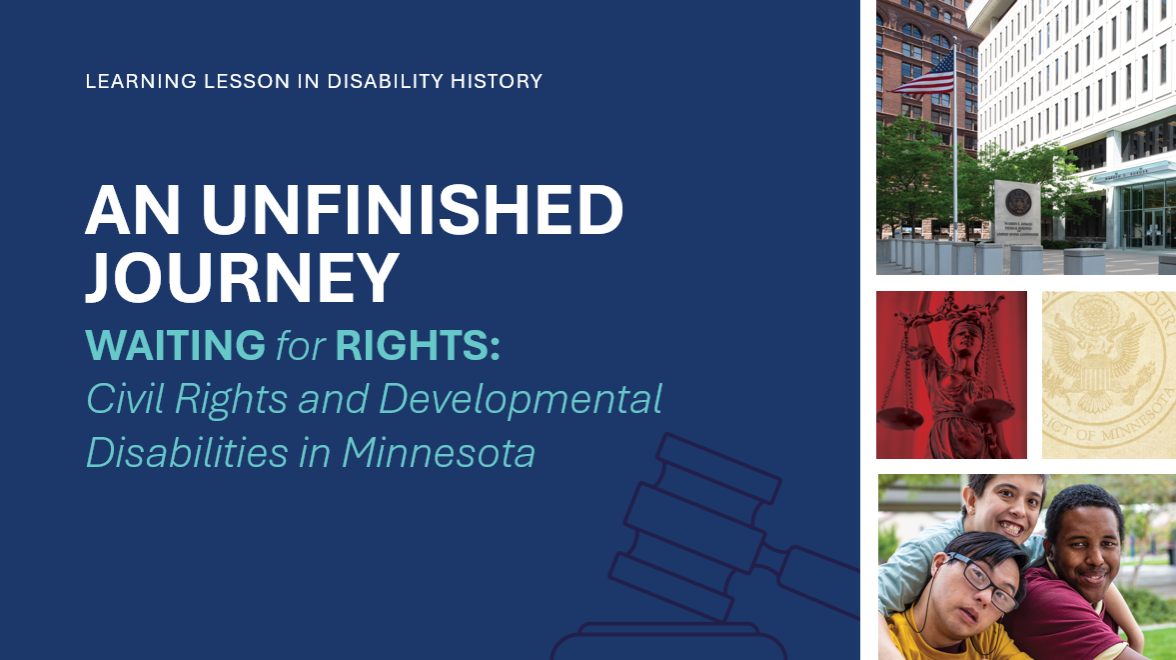
The struggle for disability rights in Minnesota is part of the wider civil rights movement in the United States, both of which strive for equality, justice, and inclusion in the community. Civil rights are the legal protections and freedoms people have within a society. Learning about the history of civil rights can help us understand and address unfairness, so everyone can contribute to making communities more inclusive and welcoming.
The Minnesota Governor's Council on Developmental Disabilities co-created with people with disabilities, their family members, and supporters, the Minnesota Disability History Learning Lesson Package as part of the "An Unfinished Journey" educational project begun by the Minnesota Federal District Court in 2023.
The lesson has four main learning objectives:
- To define civil rights and explain why they matter to all people,
- To describe the history of disability rights in Minnesota and connect it to broader civil rights movements,
- To recognize ongoing challenges faced by people with developmental disabilities today, and
- To identify at least one concrete action each of us can take to support full equality for people with disabilities.
This Learning Lesson is designed to be shared by presenting it to multiple audiences including Individuals with Developmental Disabilities, Family Members and supporters; Community Groups with civic interests; and School-aged children (grades 4 – 12) as a supplement to social studies civil rights lessons. The Lesson includes a PowerPoint slide deck "Waiting for Rights: Civil Rights and Developmental Disabilities in Minnesota" with video clips, and a Facilitator Guide that supports the presentation.
PowerPoint Slide Deck with 1080P Videos (268MB Zip file) »
PowerPoint Slide Deck with 720P Videos (195MB Zip file) »
Facilitator's Guide (PDF) »
The Disability Justice website has been fully revamped!
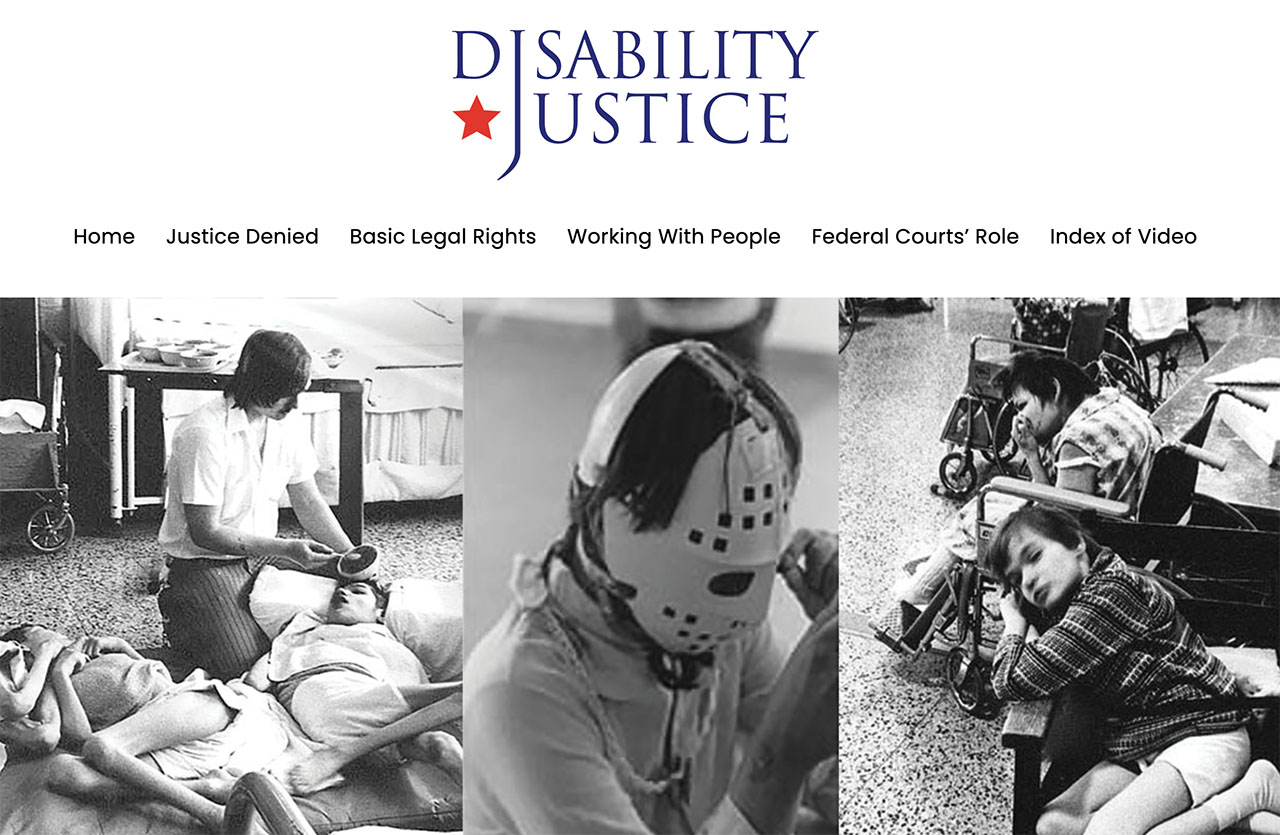
This redesign is more than a visual update — it reflects our continued commitment to inclusion, improved navigation, updated and expanded resources, and a design that centers the core value of equal justice under law. Whether you are a self‑advocate, family advocate, law school student, educator, policymaker, attorney, or community partner, we hope you'll find it easier than ever to connect with the tools and information that support the civil rights of people with developmental disabilities.
As part of this launch, we are proud to introduce two major new additions:
The Unfinished Journey Documentary – A powerful, newly released film highlighting the history, progress, and ongoing work of the Minnesota disability rights movement.
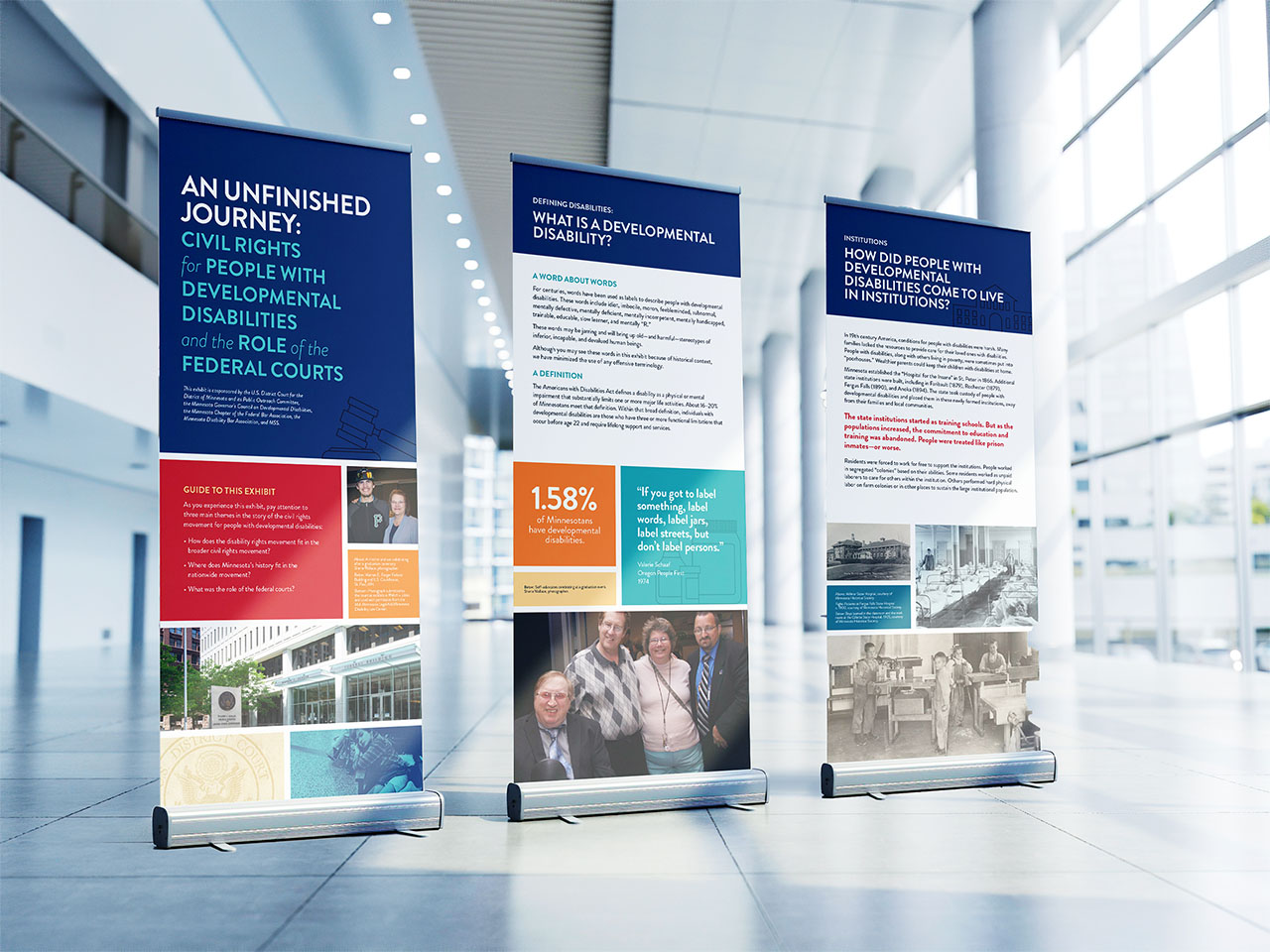
The Unfinished Journey Banners – A companion online visual exhibit that documents Minnesota milestones. These banners celebrate resilience, visibility, and the collective efforts of the parent movement, the self-advocacy movement, and the federal court system.
Taking Inclusion to the Next Level
Advocacy for people with disabilities is a long-term commitment. The new features on the Treat People Like People website reflect our ongoing work to foster understanding, acceptance, and inclusion across Minnesota.
The most obvious update is the new look, featuring an eye-catching video header, a cleaner, more user-friendly layout, and streamlined navigation that helps people spend less time searching and more time doing. But we didn't just give the site a facelift. Our refreshed and expanded toolkits and activity sheets are designed to be shared and inspire real-life action, whether you're a curious kid or a whole community ready to drive change. And because everyone deserves access, all resources are now available in English, Somali, Hmong, and Spanish, so more Minnesotans can take a stand for equality and inclusion.
Visit treatpeoplelikepeople.com to explore the updated site and share our new tools and activities with your community.

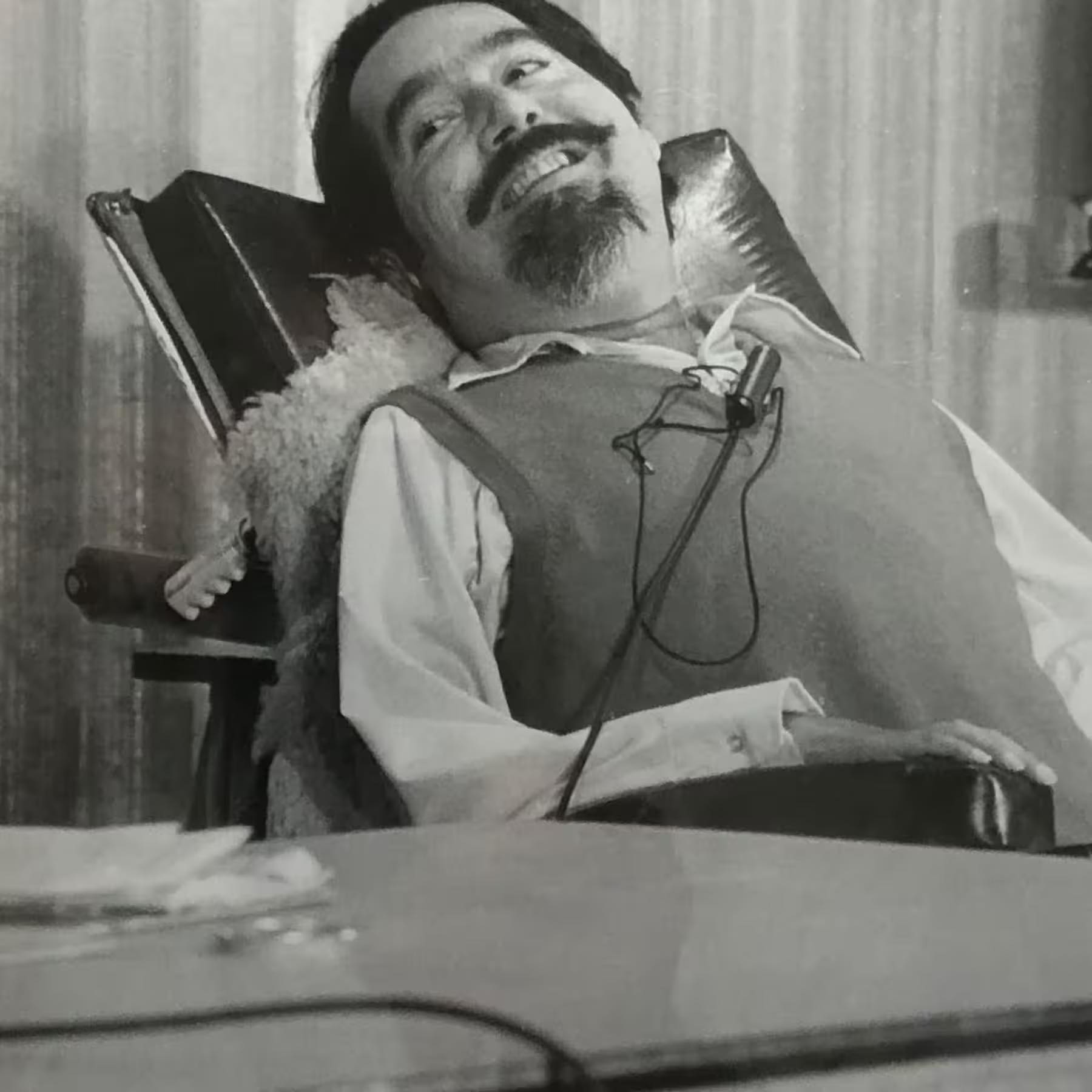
In Honor of Ed Roberts on His 87th Birthday
Ed Roberts was born on January 23, 1939. He died on March 14, 1995. We salute Ed's contributions to the civil rights of people with disabilities by adding two interviews to our website.
In 1993, Ed gave a first-person account of his college days at the University of California, Berkeley, to Lucy Gwin at Mouth Magazine. This interview, entitled "Our Man on the Moon," has been lightly edited and posted at the Council's website section about Ed.
"Whenever we start by believing people can't do it, we set up systems to do it for them. Charities do that. At the University of California, Berkeley, in the beginning, people's attitude was that I would get my PhD and then go live in a nursing home. Society's expectations of us—very low expectations—have tremendous power over us. We were very clear philosophically. We were beginning to talk about disability issues as civil rights issues."
Ed Roberts
Ed also provided a first-person account of how Independent Living was born on the University of California, Berkeley campus and then moved off-campus. That 1993 interview was lightly edited and is entitled, "Independent Living: Born on Campus."
"What would I do differently if we were starting Independent Living today (1993)? First, I would do a lot more training, getting people in touch with the history and philosophy. Today, we are not grounded in our own ideology.
Second, I would build more leadership as we go along. Give people the same basic activist training we got at UC Berkeley [in the anti-war movement, the women's movement, the free speech movement, the civil rights movement] in the Sixties.
Third, the leadership would be around political advocacy and political change, rather than one advocate working to get services for one person. We discovered that over and over. All things change when you get political power. Politics changes lives."
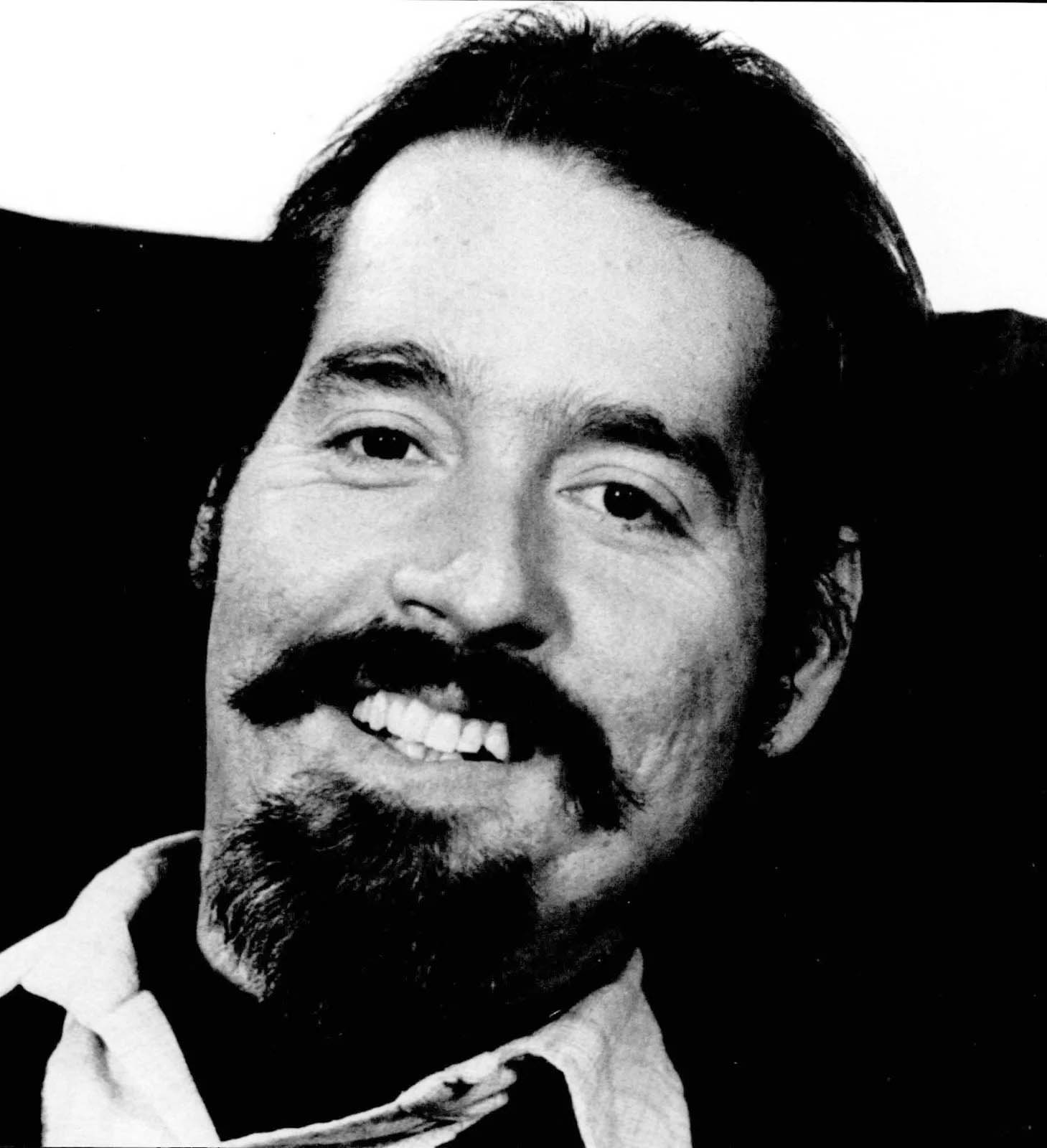
Ed Roberts: "Independent Living"
An Unfinished Journey
Civil Rights for People with Developmental Disabilities and the Role of the Federal Courts
"An Unfinished Journey" traces the powerful, yet often overlooked story of how people with developmental disabilities fought for — and continue to fight for — their civil rights in Minnesota and across America. From the dark history of institutions, restraints and forced sterilization to landmark federal court cases that reshaped freedom, dignity, and inclusion, this film reveals a movement still in motion. Through historic images, courtroom milestones, and voices of resilience, An Unfinished Journey reminds us that equality is not a destination — it's a responsibility we all share.
Exhibit of educational banners focused on disability rights in Minnesota:
On March 19, 2024, the U.S. District Court for the District of Minnesota and its Public Outreach Committee, the Minnesota Governor's Council on Developmental Disabilities, the Minnesota Chapter of the Federal Bar Association, the Minnesota Disability Bar Association, and MSS hosted a public outreach effort that debuted a series of 21 educational banners focused on disability rights in Minnesota.

Treat People Like People Website Revamped
The Office of Ombudsman for Mental Health and Developmental Disabilities sponsored new features for the Treat People Like People (TPLP) campaign including Spanish, Hmong, and Somali translations of content. The updated website also contains specially designed activities for children. The revamped TPLP website is now officially relaunched. https://treatpeoplelikepeople.org




The Governor's Council on Developmental Disabilities has supported the campaign since its 2019 launch. During the past six years, the TPLP campaign has had outstanding results with over 6.9 million views of social media posts; 5.3 million views of ads; and over 2.9 million views of videos.
Visit the children's activities—https://treatpeoplelikepeople.org/kids-disabilities-toolkit/

Inclusion Mobile Museum
A traveling exhibit that celebrates the journey from 1900 to the present to increase the independence, productivity, self determination, integration and inclusion of Minnesotans with developmental disabilities and their families.
Inclusion offers visitors a deeper understanding and perspective as Minnesotans with developmental disabilities work towards greater inclusion. Through photos and time, learn about:
- Society's perception and treatment of people with developmental disabilities for the past century
- The important role of parents of children with developmental disabilities and self advocates in the pursuit of better living conditions, educational rights, and employment opportunities.
- The Partners in Policymaking® program and the self-advocacy movement
- Key legal actions and decisions that work to ensure the Constitutional rights of people with developmental disabilities
- What can be done to support people with developmental disabilities to enjoy the same rights as everyone
Download the Banners:
- Banner 1
- Banner 2
- Banner 3
- Banner 4
- Banner 5
- Banner 6
- Banner 7
- Banner 8
- Banner 9
- Banner 10
- Banner 11
- Banner 12
- Banner 13
- Banner 14
- Banner 15
- Banner 16
- Banner 17
(09/11/24)
Bending the Arc of Disability History Toward Rights, Freedom, Social Justice, and Belonging
Presented by Allan Bergman

The Minnesota Governor's Council on Developmental Disabilities is pleased to present Allan Bergman offering a video training series "Bending the Arc of Disability History Toward Rights and Freedom". For over 6 ½ hours Mr. Bergman covers more than two centuries of progress in disability history and policy. The series is divided into nine sections and allows the user to browse by topic. The nine sections are:
- Section 1. A Brief History of Disability (1800s to 1979)
- Section 2. A Brief History of Disability (1980 to 2022)
- Section 3. Values and the Federal DD Act and Education Act
- Section 4. Values and the Federal AT Act and Transition
- Section 5. Values and Employment
- Section 6. Current Topics and the Integration Mandate
- Section 7. Integration and Postsecondary Education
- Section 8. Integration and Living in the Community
- Section 9. A Call to Action
View Allan Bergman's presentation on Disability History »
(6/27/23)