
Some bills clearing initial hurdles at Capitol, others wait
April, 2024
By Access Press Staff
With the first bill deadline behind them, Minnesota disability advocates continue to push forward on bills still viable this session. While some proposals missed the March 22 deadline, advocates are exploring amendments or laying groundwork for 2025. Recent financial forecasts show a projected $3.715 billion surplus for the 2024–25 biennium, up $1.324 billion from prior projections, though spending priorities remain limited.
Advocacy Rallies:
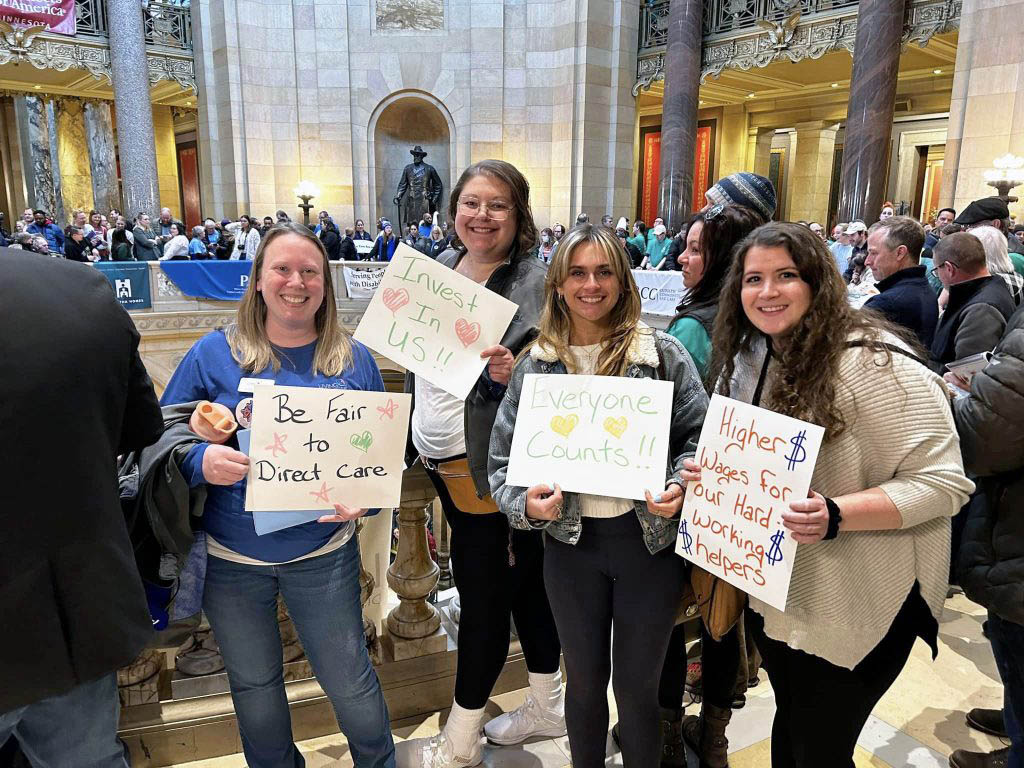
- Mental Health Day on the Hill (March 7): Over 500 attendees highlighted the state's mental health crisis, calling for more funding to reduce ER boarding, police interactions, and long wait times for care.
- Disability Services Day (March 19): Over 1,500 participants, led by ARRM and MOHR, advocated for housing regulation improvements, disability waiver rate updates, employment supports, and workforce solutions.
Legislators were introduced to clients and service providers, and Gov. Tim Walz encouraged building on 2023 disability service gains.
Key Legislative Updates:
- School Resource Officer Compromise: Walz signed a law addressing SRO use of force, including prone restraint. Officers may use it only under specific circumstances; school staff are banned. Training and a model policy, developed with POST Board oversight, are required.
- Subminimum Wage Proposal: Efforts stalled in the Senate; advocates and labor unions see it as an equity measure, while opponents argue it could reduce employment opportunities for some people with disabilities.
Budget Context:
- The Walz administration released a $226 million supplemental budget for 2024–25, focused on safe communities, clean water, and support for children and families.
- About $2 billion of the anticipated $3.715 billion surplus remains unallocated.
- A $989 million bonding bill is also proposed.
- Departmental allocations are tight, limiting new spending for mental health, personal care, special education, and other areas.
Advocates are encouraged to continue meeting with legislators, attend rallies, and track bills through resources such as the Minnesota Council on Disability Bill Tracker.
Some bills clearing initial hurdles at Capitol, others wait | Access Press